

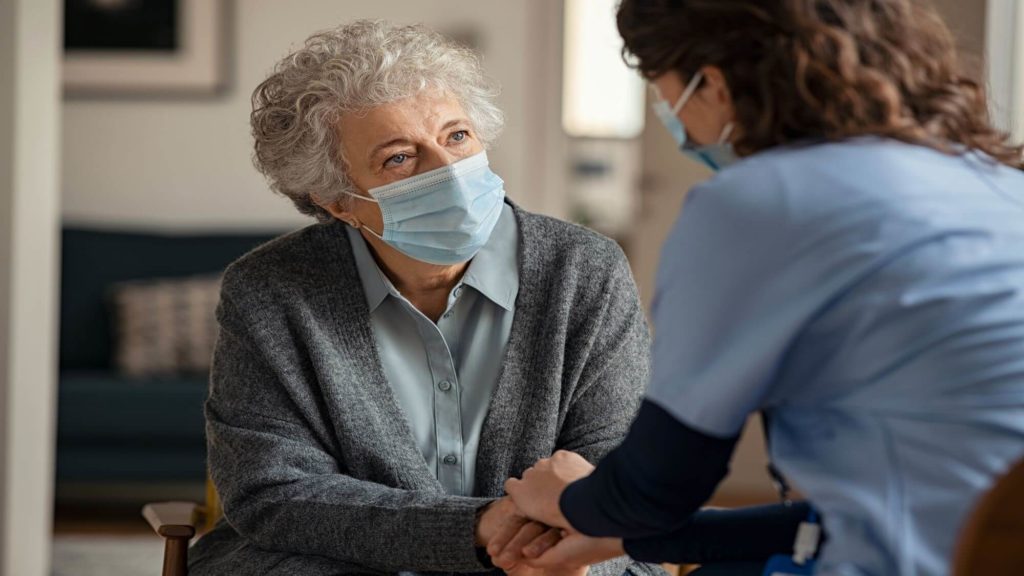
Many nursing homes that operated under culture change principles before the COVID-19 pandemic maintained or expanded their efforts to focus on quality of life and person-centered care for their residents during the pandemic. I was able to do. A survey of nursing home managers and other staff members.
In fact, 60% of survey respondents said they were able to maintain most culture change measures during the pandemic.
In January and February, the nonprofit Altarum conducted surveys of nursing home managers and other staff members in communities associated with the Green House Project, Pioneer Network, Eden Alternative, and Live Oak Project. The results, representing responses from 62 nursing homes in 30 states, will be published Monday in a special report, “The Sustainability of Person-Centered Care During the Pandemic: How COVID-19 Affects Cultural Change Initiatives in Nursing Homes.” ” was published.
According to the report, the organization, identified as a “culture change” facility, will continue to use people-centered practices and protocols at a time when infection prevention and control are inevitably much more dominant. I tried to determine whether or not
“Our results suggest that, despite the severe impact of the pandemic, it strengthened the willingness of culture change home staff to continue adapting rather than reverting to traditional institutional-style care practices. ‘ writes the authors of the report.
Other research highlights:
- 87% of respondents say they will not be limiting visitors to their homes by March 2022.
- 81% said they reconfigured or updated their indoor spaces to better facilitate COVID-free gatherings.
- 77% say they have maintained or expanded their efforts to learn and support their residents’ concerns.
- 61% say they have expanded support for virtual communications, including video calling and email support.
“Altarum believes that the creativity and flexibility inherent in person-centered care will enable leaders of these nursing homes to make choices during the pandemic, such as supporting resident choices in everyday life and visiting people who are important to them. We are very pleased to know that we have been able to continue and even expand our practice,” said Sarah Slocum, Program Director of Delivery Systems Transformation at Altarum, in a statement. We believe that centered care is key to improving the quality of life of residents and the quality of nursing homes as a whole.”
Despite positive trends, respondents said they faced challenges during the pandemic, including changes in group outings, cross-generational programming, residents’ opinions of mealtimes and menu choices, and other aspects of nursing home culture. There were many reports that the principle of change had to be curtailed.
“Culture change homes have shown that it is possible to maintain at least some human-centered practices during the pandemic, in tandem with labor shortages. Despite the emphasis, culture-changing households fought to maintain a level of person-centredness,” the authors wrote, adding that “beyond the makeshift stage,” cultural change practices and protocols.
“We encourage policymakers to achieve the dual goals of improving emergency preparedness and resident safety, while helping millions of people live better lives2. We urge you to act quickly to incorporate culture change learning that can achieve one goal,” they said.
