

China’s record heat wave that began in June has evaporated more than half of the hydropower capacity in Sichuan, a southwestern province that normally derives 81% of its electricity from hydroelectric plants. Industrial production and daily life in the region have come to a halt due to reduced energy supplies, despite increased demand for cooling.
And with power supplies becoming less reliable, governments are imposing EV charging limits to prioritize more critical daily power needs.
Finding working charging stations in Sichuan province and neighboring Chongqing has taken as long as two hours this week, compared with minutes before the heatwave, according to Chinese publications. The majority of public charging stations, including those operated by major EV brands such as Tesla and China’s NIO and XPeng, are closed in the region due to government restrictions on the use of commercial power.
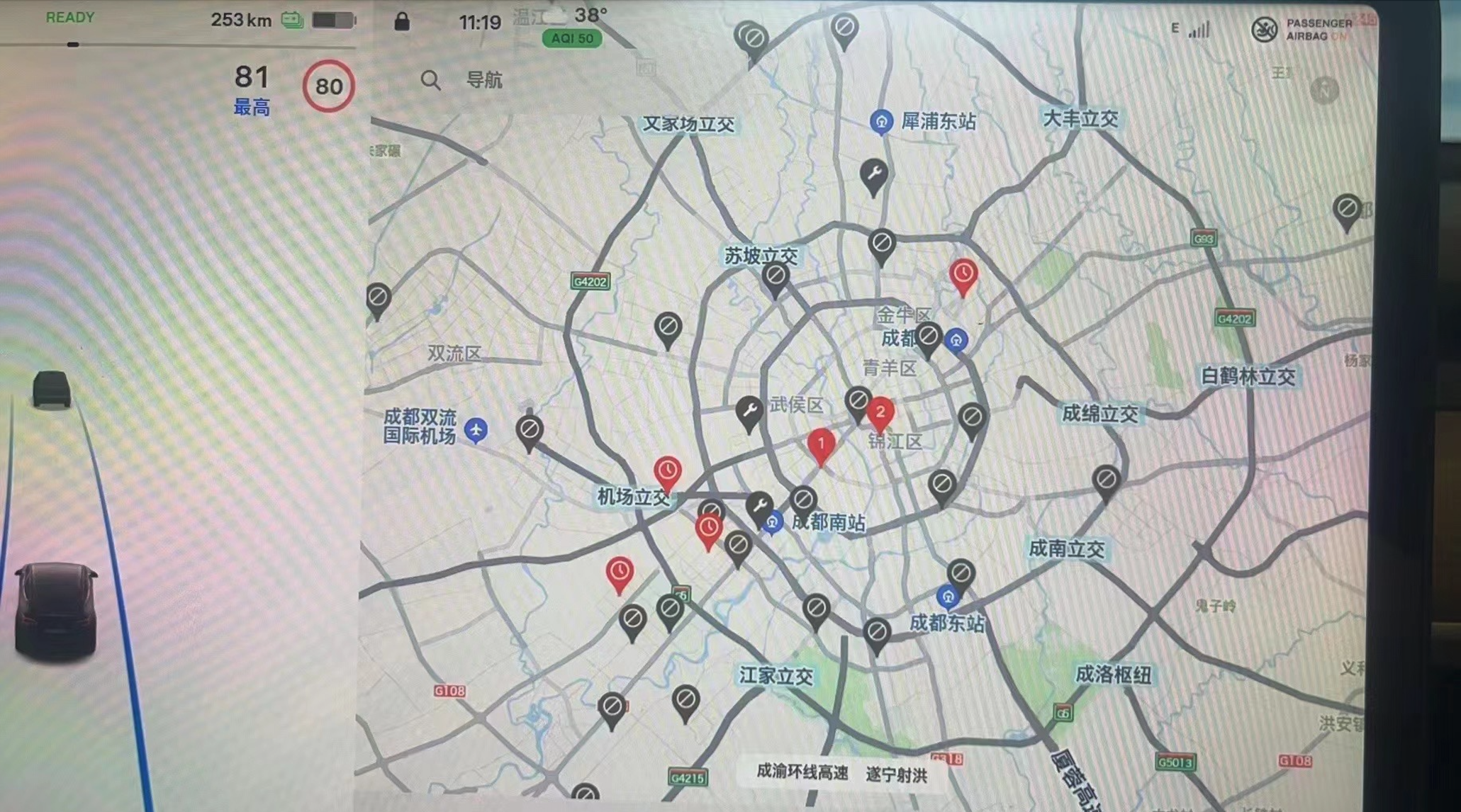
31 Tesla Supercharger stations in or near Chengdu, the capital of Sichuan province, on Aug. 24, according to screenshots sent to MIT Technology Review by a Chinese Tesla owner from Sichuan province who requested anonymity for privacy reasons. Only two of them were working. As usual.
In addition to facing mandatory service outages, EV owners are encouraged or forced to charge only during off-peak hours. In fact, the country’s leading telecom operator, TELD, closed more than 120 charging stations in the region during peak electricity usage hours of 8am to midnight. State Grid, China’s largest state-owned power company, also builds and operates EV charging stations. The company announced on August 19 that in three provinces with more than 140 million residents and a total of 800,000 electric vehicles, he will offer 50% off coupons if drivers charge at night. announced to provide State Grid is also reducing the efficiency of the 350,000 charging posts during the day, increasing individual vehicle charging times by 5-6 minutes, but reducing total peak power consumption.
The impact is evident in videos shared on Chinese social media. In this video, long lines of EVs form well past midnight outside one of the few operating charging stations. Electric taxi drivers have been hit particularly hard because they depend on their cars for their livelihoods. “We started queuing at 8:30 pm yesterday, and it was around 5 am when we started charging,” a Chengdu taxi driver told EV Influencer. I’m waiting in. Like today, I didn’t get much business, but now I’m in line again, and my battery drains fast.”
Charging issues are driving some people back to using fossil fuels. A Tesla owner who lives in Sichuan province was due to visit Chengdu on business this week, but was worried he would not find a place to charge before returning home, so he no longer drove a petrol car. made it Plug-in He has switched to gas this week, another driver in Chengdu who owns a hybrid vehicle told MIT Technology Review that he switched to gas because electricity is usually a bit cheaper.
The sudden difficulty in charging in Sichuan and neighboring provinces has taken the EV industry by surprise. “We have never seen such a large-scale power shortage. [in China]says Lei Xin, an auto industry analyst and former editor-in-chief of China Auto Review. He said the climate disaster is a reminder to the industry that while China leads the world in many EV adoption metrics, it still has infrastructure weaknesses that need to be addressed. “It feels like China already has a great charging infrastructure…but when things like power capping like this happen, it exposes the problem. of EV owners have a problem,” says Xing.
.
