

Hong Kong, China – When COVID-19 first hit Hong Kong in early 2020, Cheryl, like most people in Hong Kong, found herself spending a lot of time in her tiny apartment.
Before long, the 23-year-old media worker was overwhelmed with anxiety and depression.
“We didn’t have face-to-face classes at the time, and being at home a lot made me feel anxious,” Cheryl, who asked to be called by only her first name, told Al Jazeera.
After learning about cannabidiol (CBD) for a university research project, Cheryl ordered a tincture from an online store that sells products with touted health benefits, including anxiety and stress relief.
“I started using CBD tinctures,” she said. “My thoughts were like waves crashing in, but suddenly I calmed down.”
CBD is a compound found in cannabis that does not contain THC, the psychoactive ingredient responsible for the drug’s high.
Hong Kong legally sells CBD in the form of oils, tinctures, food and beverages, amid a surge in CBD-related businesses in recent years.
Cheryl is now a regular user of CBD, spending hundreds of dollars each month on products to improve her mood.
But CBD users like Cheryl may soon be forced to find other outlets for stress as China-controlled cities plan to ban the compound earlier this year.

In June, the Hong Kong government, nominally semi-autonomous from mainland China under a system known as “one country, two systems,” unveiled a bill banning the manufacture, import, export, sale and possession of CBD products. did. .
The bill comes after Beijing last year announced a ban on cosmetics containing CBD.
After electoral reforms decreed by Beijing last year that effectively wiped out all political opposition in the Hong Kong legislature, the bill is unlikely to become law.
Hong Kong officials claim that CBD can break down into THC under “normal storage conditions” and could be a gateway for young people to take illegal drugs.
Officials also say more than a third of the nearly 4,000 CBD samples tested contained trace amounts of THC.
Meanwhile, officials say illegal drug use is becoming more common in the city.
The number of known cannabis abusers in Hong Kong has increased by a third between 2020 and 2021, and the number of people under the age of 21 has increased by nearly 50%, according to police statistics.
Hong Kong has strict drug laws that carry a maximum sentence of seven years in prison for possession and life imprisonment for manufacture and trafficking.
business wipeout
In addition to drawing consumer attention, Hong Kong’s proposed ban, which would give anyone in possession of CBD three months to dispose of the product, would be an ecological blow to the once-thriving CBD business. It rang death knell in the system.
After making headlines for its 2020 opening, Found, the city’s first CBD cafe, is set to close in October.
Fiakula Maren, chief marketing officer of the founding owner Altum International, told Al Jazeera, “The proposed ban would unfortunately result in the closure of retail stores and cafes.” .
“Altum will focus on other key markets in Australia and New Zealand.”
According to Mullen, the cafe has responded to strong demand in Hong Kong, with business growing nearly 20-fold since opening.
Morgan, an office worker, was the first to try CBD, which started gaining popularity in 2020.
“I used to put CBD drops in my drinks. Then I started using CBD e-cigarettes instead of my bad nicotine habit…it calmed me down and lessened my anxiety.
Morgan said he doesn’t use CBD often anymore, but he doesn’t understand why it’s being banned.
“Why pick something that helps people feel better emotionally and mentally?”
CBD business owners claim the government’s claims about their products miss the mark and can guarantee that everything they sell is THC-free.
“Send raw materials [of my CBD products] David Lau, an online seller of CBD products, told Al Jazeera.
Lau started his business after a friend reported that CBD eased his depression and anxiety. Before the ban was announced, Lau had hoped to open a brick and mortar store, but is now considering moving the business elsewhere.
Found’s marketer Mullen said his company “does not include cannabis or hemp in the manufacturing process, effectively guaranteeing a product that is completely THC-free at the point of manufacture.”
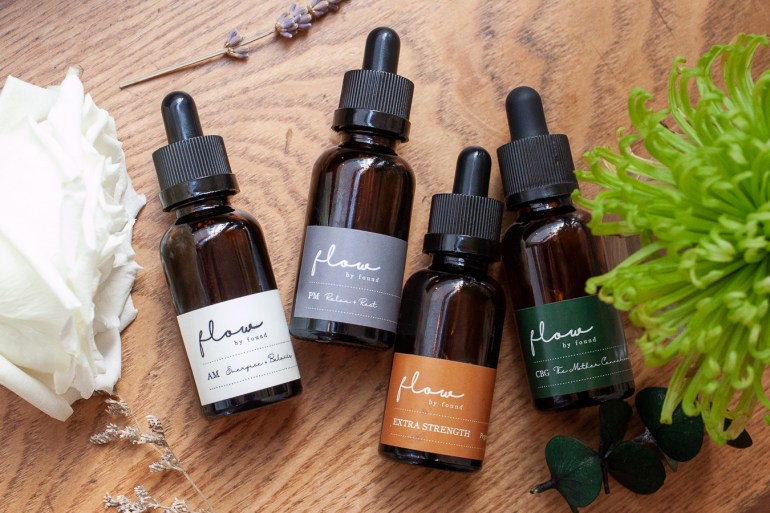
Some studies suggest that CBD may help with mental health conditions such as anxiety, but experts say more research is needed to examine its effects.
Fung Sai-fu, a lecturer in the Department of Social and Behavioral Sciences at the City University of Hong Kong, said there was a lack of evidence for CBD’s supposed benefits.
“For research and medical uses, the currently proposed CBD ban will not affect research and CBD pharmaceutical use related to cannabis compounds. There is no clear scientific evidence to support CBD for its touted health benefits,” Fung told Al Jazeera.
Fung also said some studies show that CBD users are experiencing side effects such as sleep disturbances.
“Some medical experts have warned that CBD can interfere with or contaminate other medicines.
For CBD users like Cheryl, the debate about potential risks and side effects is largely unfounded.
“this [the proposed ban] It doesn’t make sense…after we grow up, we should be able to make our own decisions,’ she said. If they want to ban CBD, they should ban tobacco too.”
.
