

The makers of “The Rings of Power,” which premiered Friday, promise viewers plenty of epic battles. increase. Middle-earth fans and scholars like Morse clashed on online forums, dueling editorials over the question:
And since “Lord of the Rings” fans are notoriously divided on all things Middle-earth, the debate could heat up. I even question whether Tolkien was a racist.
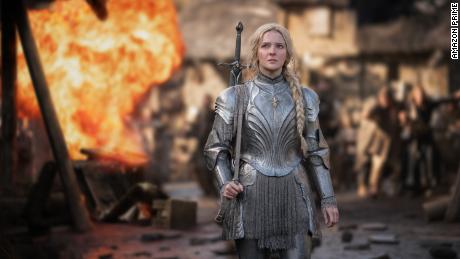
Some say fantasy stories reinforced the idea that all heroes were white men
“My wisest reaction is it’s a total bull**t,” he says.
Coren says Middle-earth is a fantasy, not a history. Coren says he grew up in England at a time when it was common for popular shows to offer blatantly racist and anti-Semitic portrayals of blacks and Jews.
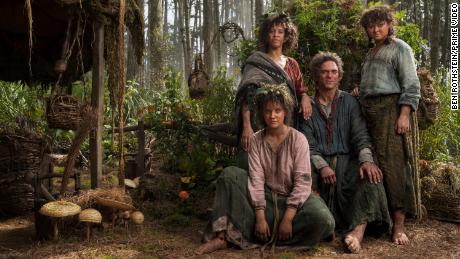
“Saying no isn’t happening. It’s no longer acceptable,” Coren says. “It’s just about being sensible, polite and empathetic.”
This clash is part of a larger debate about the inclusion of non-white, LGBTQ, and other non-traditional characters in fantasy and science fiction stories. has long normalized the idea that only one can be a hero and take responsibility.
Black actor Steve Toussaint, who plays a wealthy naval commander in the current Game of Thrones prequel, House of the Dragon, has recently been criticized for being white because of his appearance in the HBO series. I spoke to this debate when I made it clear that I was being criticized by fans.
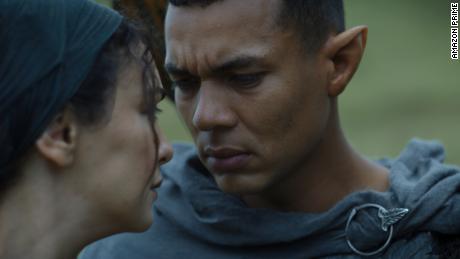
Cordova said he grew up in Puerto Rico as a fan of Tolkien’s work, but never saw anyone in Middle-earth that looked like him.
Critics say diverse casting betrays Tolkien’s vision
But those who criticize the use of non-white actors in Rings of Power argue that it has nothing to do with racism.
Having non-white actors play elves makes it more difficult for audiences to sustain their willing pause in faith, he says.
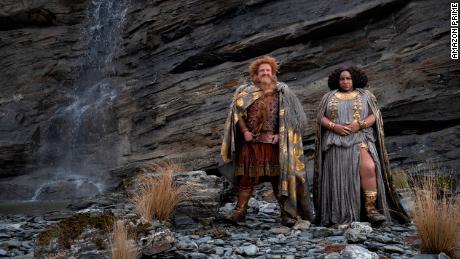
“This isn’t organic coming out of Middle-earth,” Marcos says of casting brown and black actors in the show.
RedState editor Morse says in an essay that “diversity is not a bad thing in and of itself,” but when it becomes the main focus, the story falls back to the ideological agenda. .
“If someone created a story about a great old African kingdom, but one of the royals was white, people would naturally find this very out of place,” says Morse. “This is especially problematic when the story was previously established with all characters having dark skin.”
There is even disagreement about what it means to be “awakened.”
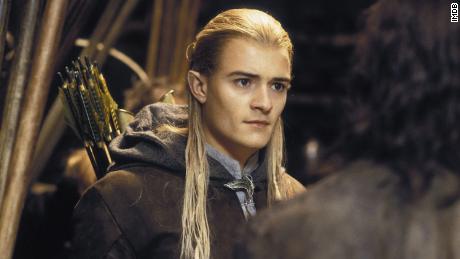
Morse has another definition. He describes ‘Awakening’ as a far-left ideology that focuses on ‘a shallow form of identity to create victims and oppressors’ and enhances a person’s racial, gender, or sexual identity over other issues such as character. I see it as an ideology.
Some see racism in the ‘faceless hordes of darkness’ in Tolkien’s world
Amazon Studios did not make anyone involved with the series available for comment. But the show has plenty of defenders.
Defenders of the series also say that Amazon Studios is savvy, not woken up. The all-white cast has become unacceptable to modern audiences. “The Rings of Power” is streaming in over 240 countries for him.
“They want as many people as possible to see it,” says Tolkien biographer Koren. “So on every level, morally, economically and culturally, it[the diverse casting]is the right thing to do.”
Some say Amazon Studios did a public service by erasing some of the implicit racism in Tolkien’s Middle-earth.
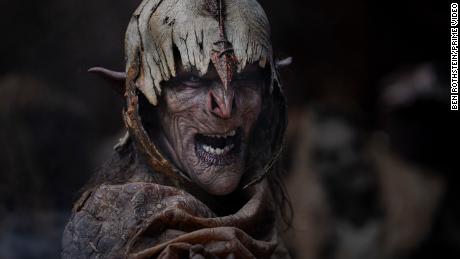
“Think about it,” Jemison wrote. “Creatures that look like humans but aren’t really. Little humans who are worthless on even the most basic moral considerations like their right to exist. The only way to deal with them is to deal with them.” Either slavery or annihilate them.”
Where did Tolkien stand in the race?
Jemison’s withering criticism has been directed at Tolkien’s work for years. This naturally led to speculation about the author’s views.
“The Far Right has long misinterpreted Tolkien as representing their own racist views,” says Garth. “They really came out of the closet in the last few years with the rise of populism and the collapse of taboos about what we are allowed to say.”
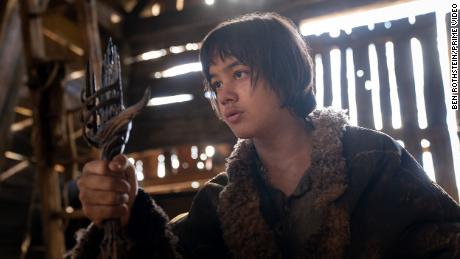
Tolkien spoke out publicly against racial and ethnic hatred, Garth says. He reprimanded me, saying that I regretted it. He hated Nazi Germany, which was built on a foundation of racial and ethnic hatred (Tolkien called Hitler “a ruddy little ignorant”).
Tolkien was also a Roman Catholic in mid-century Protestant England and would have known what it was like to be treated as a persecuted minority, Garth says.
“He was born in South Africa and said, ‘I have a hate for apartheid in my bones,'” says Garth.
Tolkien’s embrace of all mankind can be seen in the premise of his beloved fantasy series, says his biographer Coren.
The plot is driven by the ability of various groups (elves, humans, hobbits, dwarves) to band together and see beyond their superficial differences. And two of the most adorable characters in the book are Legolas the elf and Gimli the dwarf. They become close friends, he says, despite the mutual distrust that has divided the group for thousands of years.
“Tolkien certainly wrote about good and evil, but he never attributed it to race,” says Coren.
This debate casts a shadow over the enchanting world of Middle-earth
But what is the price to pay for casting a non-white actor in the lead role? Fan reaction will be one of the most interesting intrigues in the coming months.
But whatever happens, the debate over diverse casting has overshadowed this long-awaited series.
One of the reasons people become aficionados of fantasy books, movies, and TV series is that they provide an escape from the bitter divisions of our mundane, everyday world.
But Amazon’s response to the new series makes it clear that even the enchanting world of Middle-earth is no longer subject to political divisions.
Elves, dwarves and humans in “The Rings of Power” can finally unite to defeat their common enemy. But fellowship among Tolkien fans is as fragmented as in the real world. try to leave
.
