

Mohamed Alkalifa Ag Mohamed knows that a few simple questions can mean the difference between hope and despair for those who have just run away from home.
His family spent years with fellow Malians displaced by the drought and the ensuing violence before having to evacuate their own home when conflict erupted again in Mali in 2012. I was opening the door.
After fleeing to Mauritania and settling near the Mbela refugee camp, Mohammed began visiting centers that received newly arrived refugees and observing how humanitarian workers received them.
“In these moments, I realized the importance of some expressions, such as ‘Are you comfortable? Get some rest. What should I do? Drink some water…’.”
“I saw the relief on the faces of many refugees. It reminded me of how I felt in ‘UNHCR, United Nations Refugee Agency.
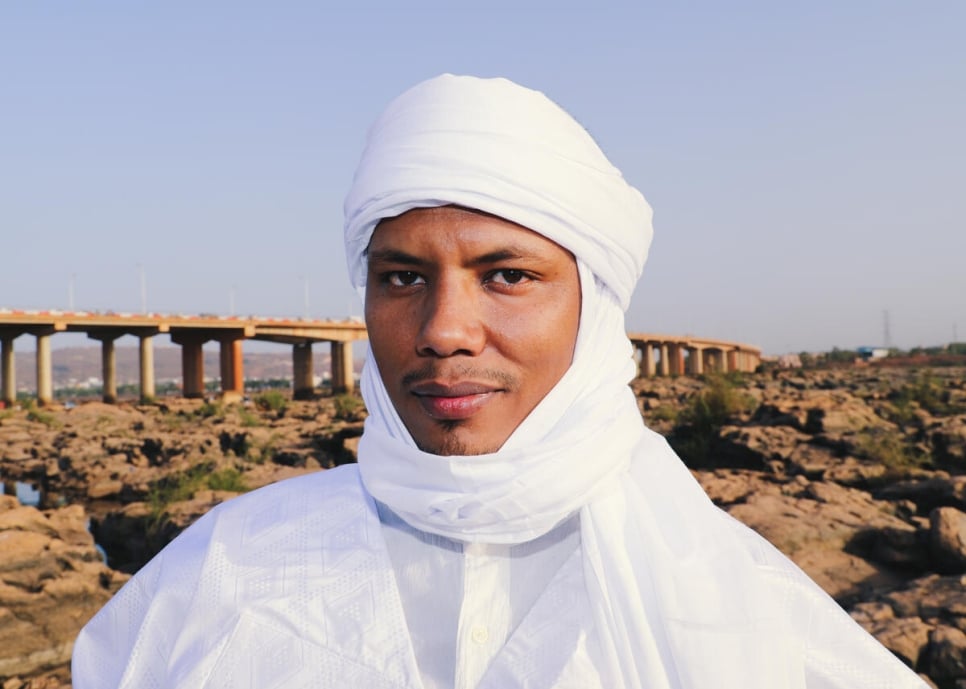
Mohamed Alkalifa Ag Mohamed returned to Mali after six years as a refugee in Mauritania and now works as a communications assistant with UNHCR. © UNHCR/Chadi Wuanez
Mohammed is one of many UNHCR colleagues who have personally experienced displacement and is one of the hundreds of thousands of humanitarian workers around the world who celebrate World Humanitarian Day on 19 August each year. I’m a person. The United Nations General Assembly chose this day to commemorate Brazilian diplomat Sergio Vieira de Melo and his 20 people who were killed in the August 19, 2003 bombing of the United Nations headquarters at the Canal Hotel in Baghdad.
• See Also: Remembering Great Humanitarians and Their Connections to Ukraine
Oleksandra Litvinenko, a protection assistant at UNHCR’s field office in Dnipro, Ukraine, was forced to flee her home twice. When she first fled fighting between government forces and pro-Russian forces in her hometown of Luhansk in 2014, she packed only a few of her summer clothes and expected to be lost in a few weeks at most. . she never came back.
“It was my second time and I understood that I wouldn’t be coming back.”
Living as an internally displaced person in the city of Shevierodnetsk, she initially struggled to find work, but with a background in working with children and families in the Luhansk municipality, she found a job at UNHCR. Connected. By the time Russia invaded Ukraine in February, she was in charge of the field forces in Sieviero Donetsk. During the day she organized the distribution of food, shelter materials and other necessities for several weeks, and at night she slept in bunkers before she and her team took refuge in Dnipro.
“Second time [I fled], I knew what to bring and what to wear. It brought a little summer, a little fall and a little winter, unlike the first time,” Oleksandra said. “The second time, I understood that I wouldn’t be coming back.”
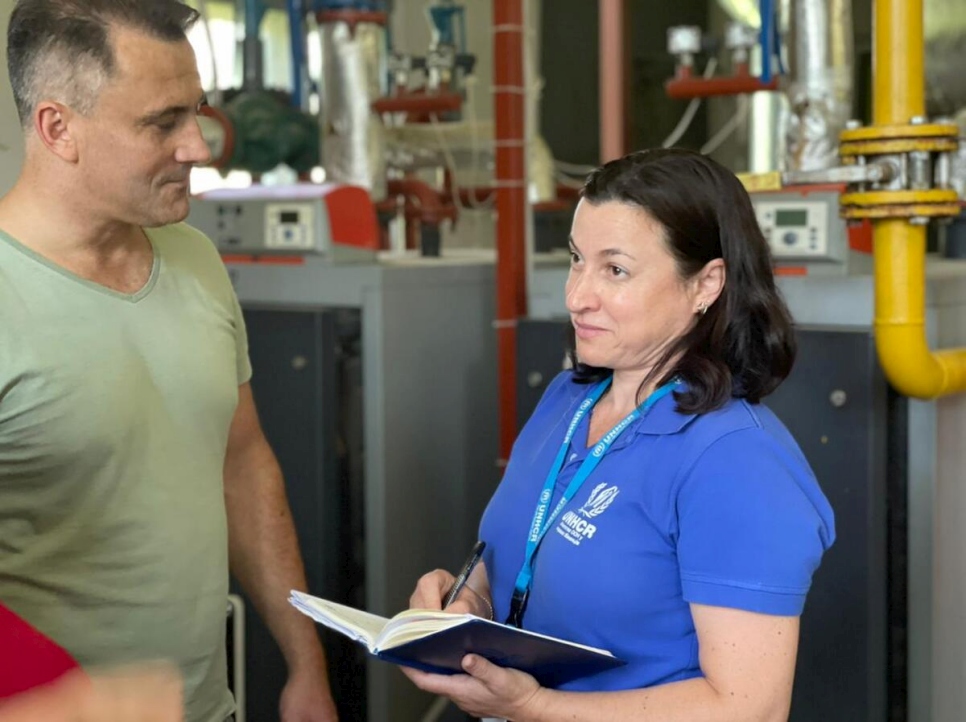
Oleksandra Litvinenko at the transit center for internally displaced persons in Novomoskovsk, Ukraine, August 9, 2022. © Courtesy of Oleksandra Litvinenko
Oleksandra uses her experience to help the displaced people she works with. Explaining to them that she may never return home is the hardest part of her job, she said, but her own life is preparing her.
“I understand people have left their homes, relatives, everything. But I explain to them that life goes on,” she said, adding exercise and spending time with friends. He added that he is trying to relieve the stress of work by doing so.
“I am a displaced person, which means that among my relatives and friends there are a huge number of displaced persons and double displaced persons. That is why I feel good when I am helping people. maybe.”
• See also. I tell them: don’t give up’
Maha Ganni, 52, a UNHCR resettlement specialist based in Panama, was born in Kuwait to Iraqi Christian parents. She and her three siblings (including identical twins) enjoy a comfortable life in her father’s job as an electrician for the Kuwait National Oil Company, a luxurious home, and an English-language high school. I was there.
However, in 1990, midway through her college career, Maha was studying interior decoration in Cyprus, while her twins completed their business degrees in Jordan. Her family was scattered across several continents and it took her four years before Maha met her parents.
Unable to return to Cyprus due to the sanctions imposed on Iraqi citizens at the time, she applied for asylum in Spain. , she could not study there.
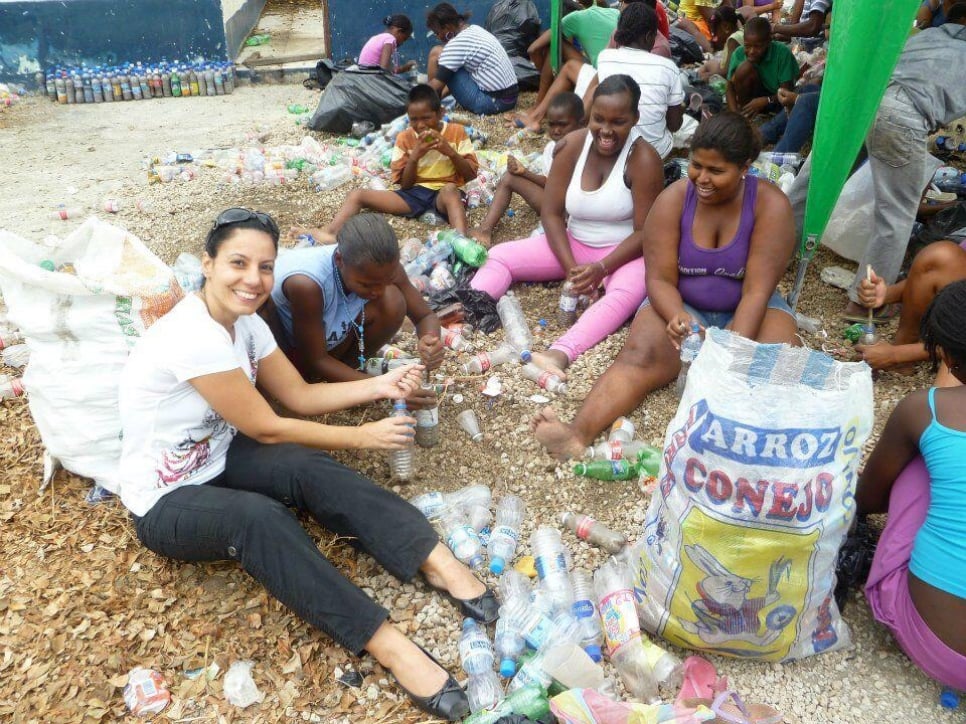
Maha Ganni works with refugees to help build a library out of recycled plastic bottles in Esmeraldas, Ecuador, 2010. © UNHCR
Maha made the most of her insecurity to learn Spanish (she was already trilingual in Arabic, English and Chaldean, a biblical language still spoken by Iraqi Christians). is). These language skills helped land her a job as an interpreter for a refugee resettlement program run by the affiliated office of the International Catholic Immigration Commission in Spain.Refugees and other displaced persons she met Many of them had experienced situations that Maha reminded them of themselves.
“That’s when I realized that this job was part of me,” she said. “Working with refugees is my passion. I just don’t think I’m doing anything else.”
“When I meet refugees, I tell them, ‘I am you and you are me.'”
Maha, who works for UNHCR, has lived in Lebanon, Ecuador, South Africa and the United Arab Emirates. For the past two years, he has been an advocate for the resettlement of people forced to flee gang violence and other threats as a resettlement expert for the UNHCR Regional Office for the Americas in Panama. As a Catholic, Maha feels that one of her prayers has been answered whenever refugees are resettled in another country.
“When I meet refugees, I tell them, ‘I am you and you are me.’ It really affects people because they feel heard. They feel understood.” At UNHCR, we are looking for people who feel with refugees, not people who feel sorry for them,” Maha said.
“My first boss who hired me said he liked hiring refugees because we brought both language and experience to the table. I think it’s true.”
Written by Sarah Schafer, with additional writing and reporting by Jenny Barchfield, Chadi Ouanes, and Kristy Siegfried.
Share on Facebook
share on twitter
